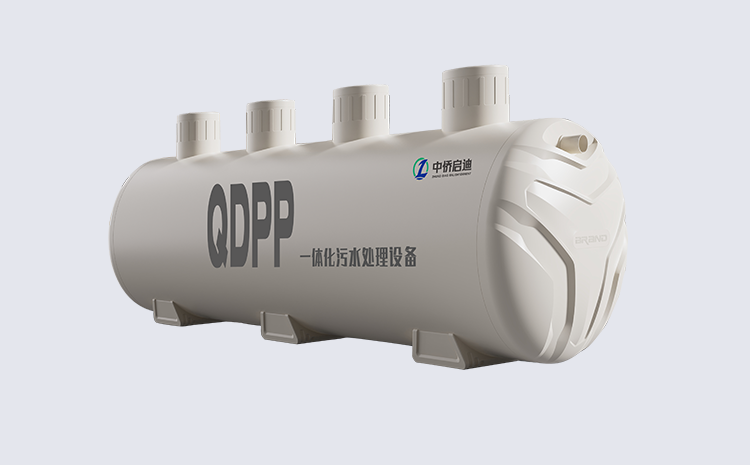
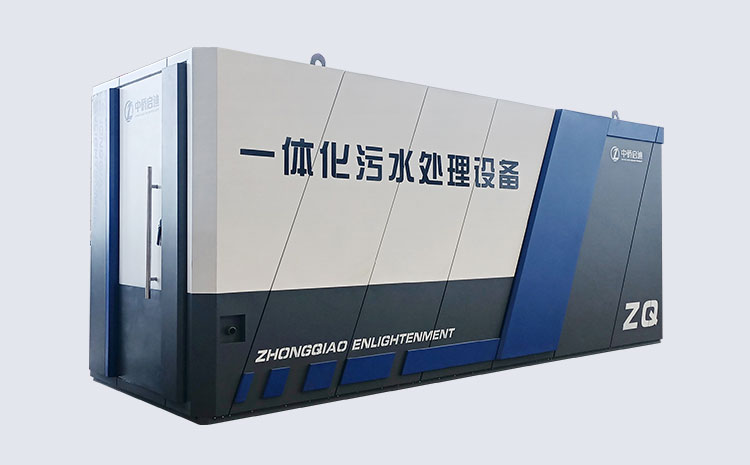
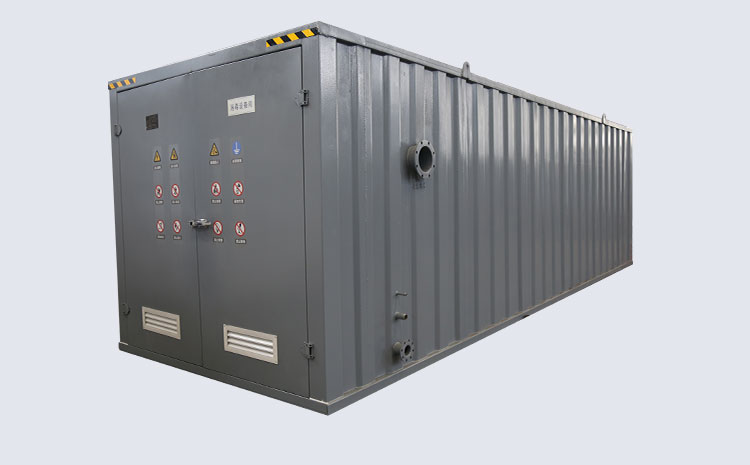
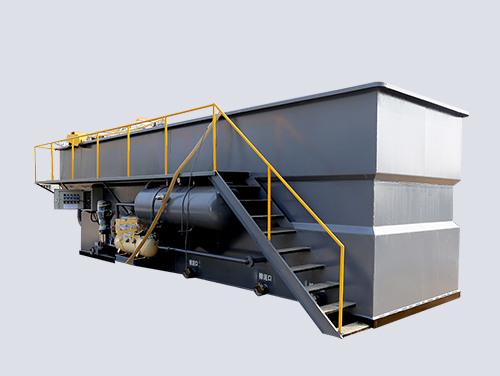
Against the backdrop of increasingly stringent environmental governance and growing scarcity of land resources, decentralized domestic sewage treatment has become a pivotal solution to wastewater challenges in towns, townships and various application scenarios. Adopting the unique advantages of modified polypropylene (PP) material, combined with modular integrated design and high-efficiency biochemical treatment processes, buried integrated PP wastewater treatment equipment perfectly integrates sewage purification, space conservation and low-cost operation and maintenance.
Widely applicable to decentralized domestic sewage treatment scenarios including rural centralized remediation, residential communities, scenic spots, township settlements and expressway service areas, it features outstanding corrosion resistance, lightweight structure, easy installation and low energy consumption. As a preferred alternative to traditional carbon steel and concrete wastewater treatment facilities, it delivers reliable support for ecological environmental protection and green development.
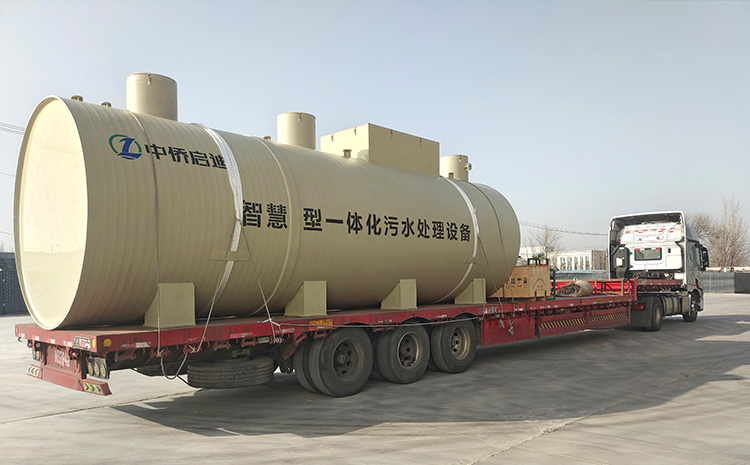
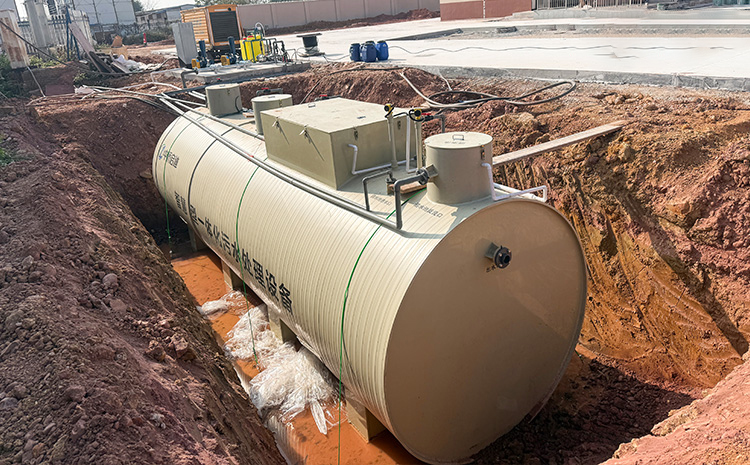
Buried integrated PP wastewater treatment equipment is defined as a sealed integrated tank structure with modified polypropylene (PPH) as the main tank material. It integrates the entire treatment process including pre-treatment, biochemical reaction, sedimentation separation and disinfection sterilization into a single sealed tank. Adopting buried installation, the equipment can be completely hidden underground without occupying surface space. The land above ground can be restored for greening, parking lots and other purposes, achieving the environmental goal of invisible pollution control and efficient discharge compliance.
The equipment covers a treatment capacity of 5-500m³/d. Specifications of 100-150m³/d perfectly meet the domestic sewage treatment demands of most small and medium-sized communities, towns and scenic spots. The effluent quality can steadily reach Grade A or Grade II standards specified in Discharge Standard of Pollutants for Municipal Wastewater Treatment Plants (GB18918-2002). For specific scenarios, it can be upgraded to reclaimed water reuse standards to realize recycled water resource utilization.
I. Core Material and Production Technology
The core competitiveness of the equipment derives from premium modified PP material and sophisticated production technology. Compared with traditional carbon steel, fiberglass reinforced plastic (FRP) and concrete, professionally modified PP material achieves substantial improvements in corrosion resistance, structural strength and lightweight performance. Standardized production procedures ensure long-term stable operation of the equipment.
(I) Characteristics of Core Material: Modified Polypropylene (PPH)
The tank body is made of food-grade PP pellets as the base raw material, blended with auxiliary additives including UV stabilizers, glass fiber reinforcing agents and antioxidants to form high-modulus modified PPH material. Its core characteristics are as follows:
- Excellent chemical stability: Resistant to acid, alkali, salt and organic corrosion. It can directly withstand various corrosive substances in domestic sewage without additional anti-corrosion coating, fundamentally eliminating rusting of carbon steel equipment and aging leakage of FRP facilities.
- Superior physical properties: The density of modified material is approximately 0.91g/cm³, only 1/3 to 1/4 of carbon steel. It features light weight and high structural strength, with tensile strength ≥35MPa, Charpy impact strength ≥15kJ/m² and ring stiffness ≥1500MPa. It can withstand underground soil pressure, groundwater buoyancy and structural loads, delivering outstanding anti-settling and anti-impact performance.
- Eco-friendly and recyclable: No waste gas or wastewater is generated during production. The equipment is 100% recyclable after scrapping with no construction waste, complying with the national dual-carbon goals and environmental requirements.
- Sanitary and safe: Non-toxic, odorless with a smooth surface. It avoids biofouling, scaling and bacterial growth, preventing secondary pollution and ensuring hygienic effluent quality.
(II) Standardized Production Technology
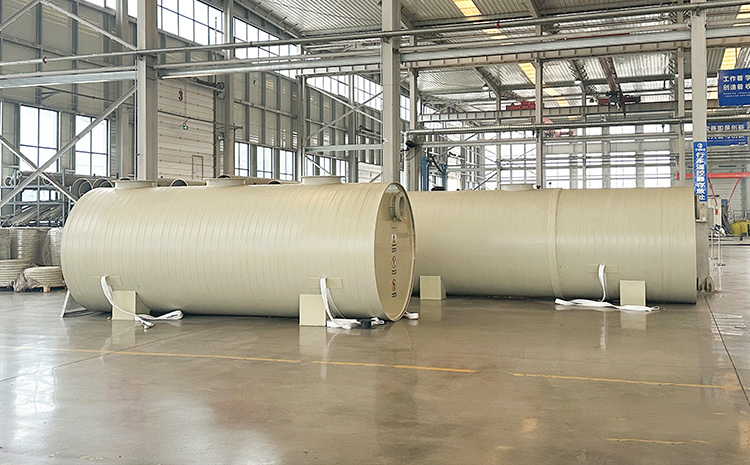
The equipment adopts factory prefabrication and modular production in full compliance with the ISO9001 quality management system, guaranteeing consistency and reliability of every unit. The core production process consists of four major procedures:
-
Material Modification and Plate Fabrication: Food-grade PP pellets are mixed with modified additives in precise proportions. Modified PP plates or strips with adjustable thickness of 15-80mm are manufactured via high-temperature melting and extrusion molding. Strict control of temperature and pressure ensures uniform texture and structural strength. The modified material features a temperature resistance range of -30℃ to 60℃, adapting to climatic conditions across all regions without deformation or brittle cracking in extreme cold northern areas or hot and humid southern regions.
-
Integrated Tank Forming: Two core molding processes are adopted according to water treatment capacity to ensure seamless structure and superior tightness.
- For medium and large-scale equipment of 100-500m³/d: Priority is given to one-piece PPH winding molding. Modified PP strips are hot-melt wound layer by layer by a numerical control winding machine with precise control of tension and temperature, achieving seamless integral tank structure, enhanced ring stiffness and excellent anti-leakage performance.
-
For small and medium-scale equipment of 5-100m³/d: PP plate hot-press splicing is applied. Modified PP plates are hot-melt butt-welded with special welding rods, with weld strength reaching over 80% of the base material. Custom irregular tank structures are available to adapt to complex installation sites.
After molding, the tank is polished integrally to ensure a smooth inner wall and reduce sewage retention and sludge accumulation.
-
Internal Component Integration and Pre-installation: After tank forming, internal zoning and component pre-installation are completed in the factory without secondary on-site construction. The interior is zoned in the process sequence of Regulation Tank → Anaerobic Tank → Anoxic Tank → Aerobic Tank → Sedimentation Tank → Disinfection Tank, minimizing pipeline connections and leakage risks.
Core components including MBBR suspended carriers, microporous aerators, inclined tube/plate sedimentation devices, reflux pumps, agitators and UV/ sodium hypochlorite disinfection units are pre-installed. The high-efficiency biological MBBR carriers feature large specific surface area to facilitate microbial biofilm formation and enhance nitrogen and phosphorus removal. Microporous aerators ensure uniform aeration with high oxygen utilization and low energy consumption.
Supporting PLC intelligent control system enables remote monitoring via mobile phones and computers, automatic aeration, reflux regulation and fault alarm, realizing unattended operation.
- Quality Inspection and Pre-delivery Commissioning: Upon completion of assembly, strict quality inspections are conducted, including 24-hour full water pressure leakage test, electrical system commissioning and linkage test of all treatment units. Biochemical reaction parameters are optimized through pre-delivery simulation commissioning, enabling rapid commissioning and operation after on-site delivery. Qualified products are issued with inspection reports and certificates before delivery.
II. Core Advantages vs. Traditional Equipment
Compared with conventional carbon steel and concrete wastewater treatment facilities, buried integrated PP equipment offers irreplaceable advantages in material performance, installation, operation & maintenance and environmental compatibility, comprehensively cutting project construction and operational costs while improving wastewater treatment efficiency.
(1) Superior Corrosion Resistance and Ultra-long Service Life (Core Advantage)
Inherently corrosion-resistant PPH material withstands acid, alkali, salt and organic contaminants in sewage with no need for regular anti-corrosion painting. It completely solves the pain points of carbon steel equipment requiring anti-corrosion renovation every 3-5 years with a service life of only 10-15 years, and avoids leakage, moss growth and inner wall scaling of concrete facilities.
Under normal operating conditions, the equipment serves over 30 years with no pitting, perforation or leakage risks, greatly reducing replacement and maintenance costs for long-term stable operation. With excellent weather resistance, it maintains stable performance without deformation or damage in extreme climates such as large temperature differences in Xinjiang and high humidity in southern China.
(2) Lightweight Structure & Rapid Installation with Greatly Shortened Construction Period
The low-density PP material makes the equipment only 1/3 to 1/4 the weight of carbon steel counterparts. Taking the 120m³/d model as an example, the total weight is only 8-10 tons, allowing hoisting with ordinary cranes without large lifting equipment, lowering transportation and hoisting costs.
Adopting factory prefabricated modular skid-mounted design with all components pre-installed in the factory, on-site construction only involves foundation excavation, equipment hoisting, pipeline connection and commissioning. No complex civil engineering is required, and installation and commissioning can be completed within 7-10 days for official operation. The construction cycle is shortened by over 50% compared with 30-60 days required for traditional concrete treatment stations, accelerating the implementation of sewage remediation projects.
In addition, buried installation reduces land occupation by over 30%. The surface land can be restored for greening and parking, efficiently saving land resources, especially suitable for land-scarce residential communities and scenic spots.
(3) Low Operation & Maintenance Cost with Reduced Energy Consumption and Sludge Yield
The equipment features low operation difficulty and cost with three major merits:
- No anti-corrosion maintenance required, eliminating regular coating work and material costs.
- Durable internal components: MBBR suspended carriers last over 10 years, and microporous aerators require no maintenance for 5 years with no clogging or rusting. Only routine inspection and cleaning every 6 months are needed, drastically reducing maintenance workload.
- Low energy consumption and sludge output: Adopting improved AO/MBBR biochemical process and intelligent variable-frequency aeration system, aeration volume is dynamically adjusted according to sewage quality and flow rate. Water consumption per ton is ≤0.3kWh, saving 20%-30% energy compared with traditional equipment. High-efficiency biochemical treatment reduces sludge yield by 30% versus conventional activated sludge process with longer sludge discharge cycles, cutting sludge disposal expenses.
Equipped with an intelligent control system for remote monitoring and fault alarm, no 24-hour on-duty staff is required; only part-time regular inspection is needed, reducing labor costs by over 30%.
(4) Stable Effluent Compliance & No Secondary Pollution
Integrating full-process pre-treatment, biochemical reaction, sedimentation and disinfection, the improved AO/MBBR combined process enhances nitrogen and phosphorus removal via synergy of anaerobic, anoxic and aerobic tanks. It effectively removes COD, BOD₅, NH₃-N, TP and other pollutants with strong impact load resistance, maintaining stable operation even with ±30% fluctuation in water quantity and quality.
The terminal UV or sodium hypochlorite disinfection unit thoroughly eliminates pathogenic microorganisms. Effluent quality steadily meets Grade A or Grade II standards, with indicators controlled at COD ≤50mg/L, NH₃-N ≤5mg/L, TP ≤0.5mg/L. The treated water can be directly discharged or reused for greening and farmland irrigation. Meanwhile, the smooth and inert PP material prevents biofouling and bacterial breeding, avoiding secondary pollution and ensuring hygienic effluent.
(5) Low-carbon Environmental Protection & Multi-scenario Adaptability
No waste gas or wastewater is generated during production, and the material is 100% recyclable with no construction waste after dismantling, conforming to dual-carbon goals and green development concepts. The buried design operates with low noise and no odor, blending perfectly with the surrounding environment without disturbing residents or damaging scenic landscapes.
It is suitable for decentralized domestic sewage treatment including rural remediation, residential communities, scenic spots, townships, expressway service areas and airports. It can operate independently or in parallel units to flexibly adapt to varying treatment capacities. With CEP certification from China Environmental Protection Industry Association and three-system certifications, it fully meets environmental acceptance requirements.
III. Treatment Process and Key Technical Parameters
(1) Core Treatment Process
Adopting modular integrated design and fully automatic operation, the equipment realizes closed-loop sewage treatment from collection to standard discharge through five key procedures:
-
Pre-treatment: Collected domestic sewage first passes through a grating to intercept large suspended solids and debris such as plastic bags, branches and gravel, preventing pipeline and equipment blockage. The sewage then flows into the regulation tank for homogenization and flow equalization to mitigate peak flow impact, adjust pH and water temperature, and create stable conditions for subsequent biochemical treatment. Agitators are equipped to avoid sludge sedimentation.
-
Biochemical Treatment (Core Procedure): Pre-treated sewage enters the anaerobic tank, where macromolecular organic matter is decomposed into small molecular compounds by anaerobic microorganisms, partial COD is removed and phosphorus is released. It then flows into the anoxic tank, where denitrifying microorganisms convert nitrate nitrogen into nitrogen gas for denitrification. Finally, sewage enters the aerobic tank filled with MBBR suspended carriers. Microorganisms form biofilms on the carrier surface to efficiently degrade organic pollutants and ammonia nitrogen with oxygen supplied by the aeration system. The MBBR process combines the advantages of activated sludge and biofilm methods with strong impact load resistance and high treatment efficiency.
-
Sedimentation and Separation: Biologically treated sewage flows into the sedimentation tank. Settled biofilm and suspended sludge sink to the tank bottom via gravity through inclined tube/plate facilities. Supernatant flows into the disinfection tank, while part of the bottom sludge is refluxed to anaerobic and anoxic tanks for cyclic utilization, and excess sludge is discharged periodically to minimize sludge disposal volume.
-
Disinfection and Sterilization: Supernatant from the sedimentation tank enters the disinfection tank, where pathogenic bacteria and viruses are eliminated by UV or sodium hypochlorite disinfection. The treated effluent reaches discharge standards or enters the reclaimed water reuse system.
-
Intelligent Control: The whole system is managed by PLC intelligent control, real-time monitoring operating status and water quality parameters including COD, ammonia nitrogen and dissolved oxygen. It supports automatic aeration, reflux adjustment, fault alarm and remote data viewing and parameter setting via mobile phones and computers, achieving unattended operation.
(2) Key Parameters (120m³/d Model as Standard)
- Treatment Capacity: 120m³/d (customizable 5-500m³/d)
- Tank Material: Modified PPH polypropylene, wall thickness 15-25mm, seamless integral structure
- Treatment Process: Regulation + Anaerobic + Anoxic + Aerobic (MBBR) + Sedimentation + Disinfection
- Effluent Standard: Grade A standard of GB18918-2002
- Key Effluent Indicators: COD ≤50mg/L, BOD₅ ≤10mg/L, NH₃-N ≤5mg/L, TP ≤0.5mg/L
- Installed Power: Approx. 15kW, water consumption per ton ≤0.3kWh
- Equipment Dimension: L×W×H ≈12m×3.5m×2.8m (buried type, customizable)
- Service Life: Over 30 years
- Maintenance Cycle: Routine inspection every 6 months with low maintenance frequency
- Installation Type: Buried / Semi-buried, surface land restorable for greening
- Control System: PLC + Touch screen, supporting remote monitoring, automatic operation and fault alarm
IV. Application Scenarios and Typical Cases
(1) Applicable Scenarios
Featuring flexibility, high efficiency and energy saving, the equipment is widely adopted in decentralized domestic sewage treatment, especially ideal for the following fields:
- Rural Domestic Sewage Remediation: Suitable for centralized rural renovation and scattered village sewage treatment, adapting to small water volume, fluctuating water quality, limited site space and weak on-site maintenance capacity with low-cost long-term operation and unattended management.
- Urban Residential Communities: Applicable to new community construction and old community renovation. Buried installation occupies no leisure or greening space, realizing on-site sewage treatment and standard discharge.
- Scenic Spots and Resorts: Adapted for tourist resorts and homestays with low noise and no odor, preserving landscape ecology while treating domestic sewage generated by tourists.
- Towns and Small Cities: Used for domestic sewage treatment in township settlements without constructing large-scale wastewater treatment plants. Modular design allows flexible capacity expansion to reduce construction and operation costs.
- Other Decentralized Scenarios: Including expressway service areas, airports, stations, schools and nursing homes. It solves sewage discharge problems in areas with incomplete pipe network coverage and supports reclaimed water reuse for water conservation.
(2) Typical Application Cases
Case 1: Rural Domestic Sewage Treatment Project, Linfen, Shanxi
Covering multiple natural villages with treatment capacities of 10m³/d, 20m³/d and 60m³/d, buried integrated PP equipment is adopted with the process of Regulation-Anaerobic-Anoxic-Aerobic-Sedimentation-Disinfection. The tank adopts one-piece PPH winding molding with customized wall thickness. Since operation, effluent has steadily met Grade A standards with no noise or odor, maintaining rural landscape integrity. Only weekly part-time inspection is required with low operation costs, effectively improving local water environment quality.
Case 2: Industrial Park Wastewater Treatment Project, Food Industry
With a daily treatment capacity of 120m³/d, the project adopts buried integrated PP equipment with integrated air flotation + AO + disinfection process. The equipment is buried under the green belt and perfectly integrated into the factory environment after surface greening restoration. After one year of operation, effluent complies with Water Quality Standard for Sewage Discharge into Urban Sewerage Network with no leakage or odor. Operation and maintenance costs are reduced by 40% compared with traditional carbon steel equipment, achieving the goal of invisible pollution control and high energy efficiency.
Case 3: Township Domestic Sewage Treatment Project, Xinjiang
Single unit capacity of 250m³/d, with 8 sets operating in parallel for a total capacity of 2000m³/d. Adopting high-modulus one-piece PPH winding tank suitable for Xinjiang’s dry climate and large temperature difference, the equipment operates stably without deformation or leakage. Effluent indicators remain below COD ≤50mg/L and NH₃-N ≤5mg/L, effectively solving local township sewage discharge problems and supporting ecological improvement.
V. Product Service and Quality Assurance
Adhering to the philosophy of Quality First, Service Supreme, we provide one-stop wastewater treatment solutions covering pre-consultation, customized scheme design, equipment production, installation & commissioning and after-sales operation & maintenance, ensuring stable equipment operation and environmental compliance for clients.
- Customized Solution Design: Professional technical teams conduct on-site surveys to design personalized wastewater treatment schemes tailored to client-specific water volume, effluent standards, site conditions and environmental requirements, optimizing equipment parameters and layout for scientific, reasonable and cost-effective solutions.
- Professional Installation and Commissioning: Experienced engineering teams strictly follow construction specifications for foundation excavation, equipment hoisting, pipeline connection and system commissioning. Installation and commissioning are completed within 7-10 days for rapid official operation.
- Comprehensive Operation & Maintenance Training: Professional training is provided for client staff covering equipment working principles, operation procedures, daily inspection guidelines and troubleshooting skills to ensure proficient on-site operation.
- Complete After-sales Support: A 24-hour after-sales response mechanism is established. Technical personnel are arranged for on-site troubleshooting upon feedback, with regular routine inspection and maintenance guidance. Free replacement of wearing parts is provided within the warranty period to guarantee long-term stable operation.
- Qualification and Quality Assurance: The equipment is certified by ISO9001 quality management system, CEP and three-system certification, with over 50 relevant national patents. Strict quality control is implemented throughout production, with every unit passing comprehensive testing before delivery.
VI. Product Summary
Centered on modified PPH material and integrated with modular design and high-efficiency biochemical technology, buried integrated PP wastewater treatment equipment fundamentally addresses the drawbacks of traditional facilities including poor corrosion resistance, long construction period, high operation costs and large land occupation. Boasting corrosion resistance, long service life, lightweight rapid installation, low energy consumption, stable effluent and low-carbon environmental performance, it is widely applicable to decentralized sewage treatment in rural areas, residential communities, scenic spots and towns.
It realizes on-site sewage treatment, standard discharge and reclaimed water reuse, supporting ecological protection and green development. As the optimal choice for decentralized wastewater treatment, buried integrated PP equipment not only meets stringent environmental standards but also reduces project construction and operational costs, achieving dual goals of environmental compliance and economic efficiency.
In the future, we will continuously optimize product technology, upgrade equipment performance and improve the service system to deliver more high-quality and reliable wastewater treatment solutions, contributing to the high-quality development of the environmental protection industry.