Removing Pollutants Before Biological Treatment
Industrial wastewater may contain oil, grease, fine suspended solids, fibers, pigments, or particles that settle poorly. If these pollutants enter a biological system without suitable pretreatment, they can increase loading, reduce oxygen transfer, interfere with biomass, and create unstable effluent. Air flotation equipment offers a compact method for separating contaminants that can attach to fine bubbles and rise to the water surface.
ZhongQiao Enlightenment configures flotation equipment according to wastewater testing and process trials where required. The treatment result depends on more than the flotation tank itself. Coagulation, flocculation, dissolved-air generation, hydraulic distribution, skimming, sludge discharge, and downstream connections must operate as one process.
How the Separation Process Works
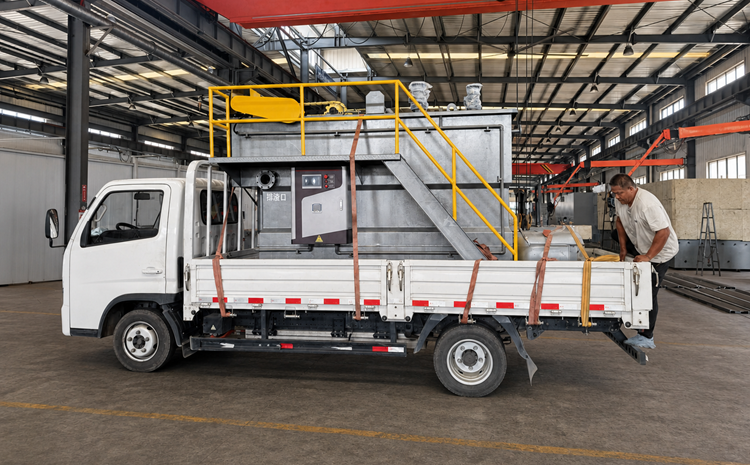
In dissolved air flotation, part of the treated or clarified water is pressurized so that air dissolves into it. When pressure is released, fine bubbles form and attach to flocculated particles. The combined bubble-particle mass rises to the surface and creates a floating sludge layer, which is removed by a skimming mechanism. Clarified water leaves through the collection zone.
Bubble size, recycle pressure, release efficiency, contact conditions, surface loading, and skimmer operation influence separation. Uneven flow can create short-circuiting, while weak flocs may break before reaching the separation zone. Equipment geometry and hydraulic design must therefore support gentle contact and stable upward separation.
Chemical Dosing and Floc Formation
Coagulants destabilize fine particles, and flocculants help them form larger aggregates that can be separated more easily. The correct chemicals and dosage depend on pH, pollutant type, concentration, temperature, and wastewater variability. Jar testing provides useful guidance, but full-scale operation may still require adjustment as production conditions change.
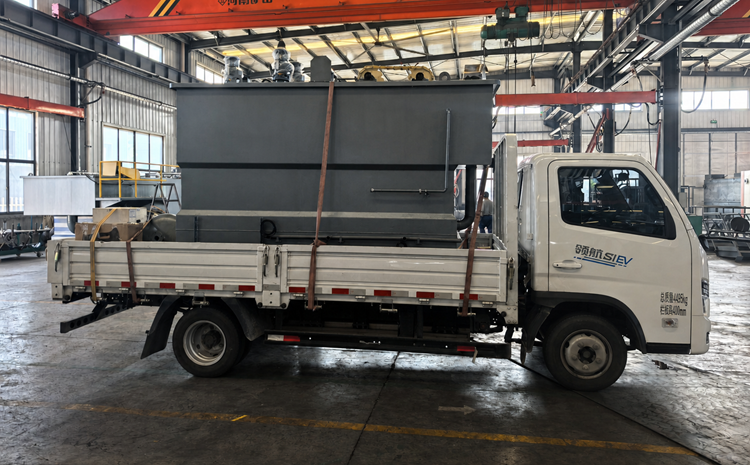
A dosing system should allow controlled preparation, mixing, and delivery. Excess chemicals can raise operating cost, increase sludge production, and create downstream effects, while insufficient dosage can leave particles dispersed. ZhongQiao Enlightenment integrates reaction time and mixer selection with the flotation unit so flocs are formed without being unnecessarily damaged.
Applications and Equipment Selection
Air flotation is used in food processing, slaughtering, textile, paper, printing, oily wastewater, machining, chemical production, and other industrial applications. Each industry presents different pollutants and operating patterns. Food wastewater may contain fats and biodegradable solids, while textile wastewater can contain color and fine fibers. Equipment selection must reflect the actual wastewater rather than the industry name alone.
Capacity should consider both average and peak flow. Equalization can reduce sudden loading changes and improve chemical control. Sludge concentration, removal frequency, odor, corrosion, and disposal route also influence equipment layout. Material and coating selection should match the wastewater and installation environment.
Keeping Flotation Equipment Stable
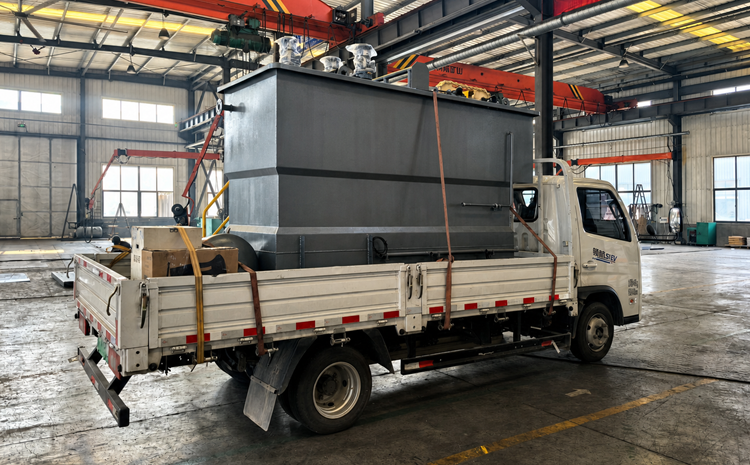
Operators should observe bubble condition, surface sludge, clarified-water quality, recycle pressure, chemical consumption, and skimmer movement. Changes in wastewater pH or production ingredients can quickly affect floc formation. Routine cleaning of release devices, pipelines, dosing equipment, and collection areas helps prevent loss of performance.
When properly integrated, air flotation reduces the pollutant load entering downstream treatment and can improve overall system resilience. ZhongQiao Enlightenment combines equipment manufacturing with process coordination to provide flotation solutions that are practical to install, adjust, and maintain.